* Final project for Product Design Bachelors Degree, was award the Robert McKim Design Achievement Award
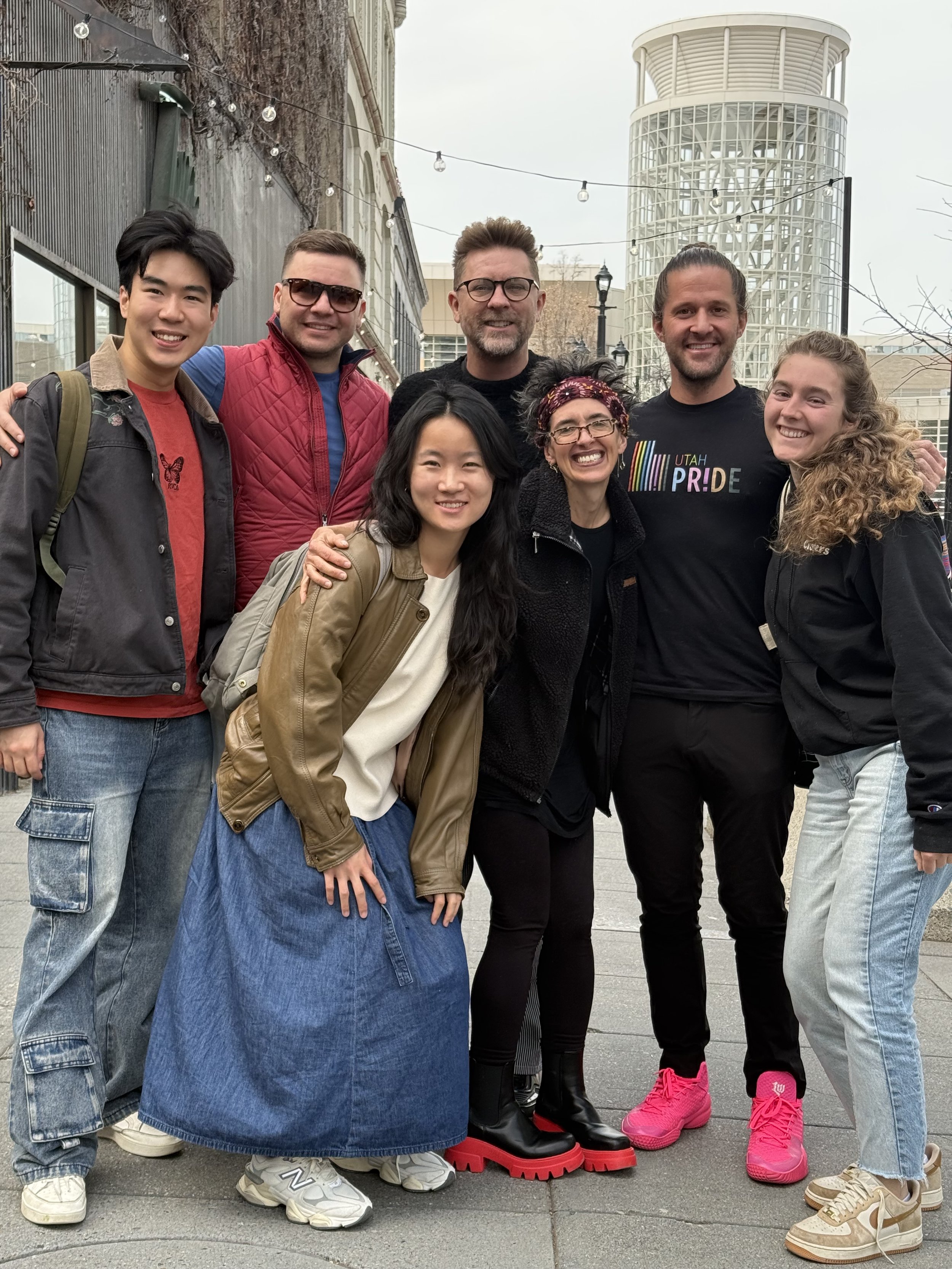
We conducted a wide range of interviews - talking to youth who currently are part of Encircle’s network, volunteers who work there, and LGBTQ+ youth who are not familiar with Encircle. We wanted to learn what the youth really wanted/needed, and what currently prohibits them from engaging in the community activities even if they say they want to. The image to the right shows my team with the CEO of Encircle and LGBTQ+ leaders in Utah on a research trip to better understand the context of the problem.
Research & Prototyping
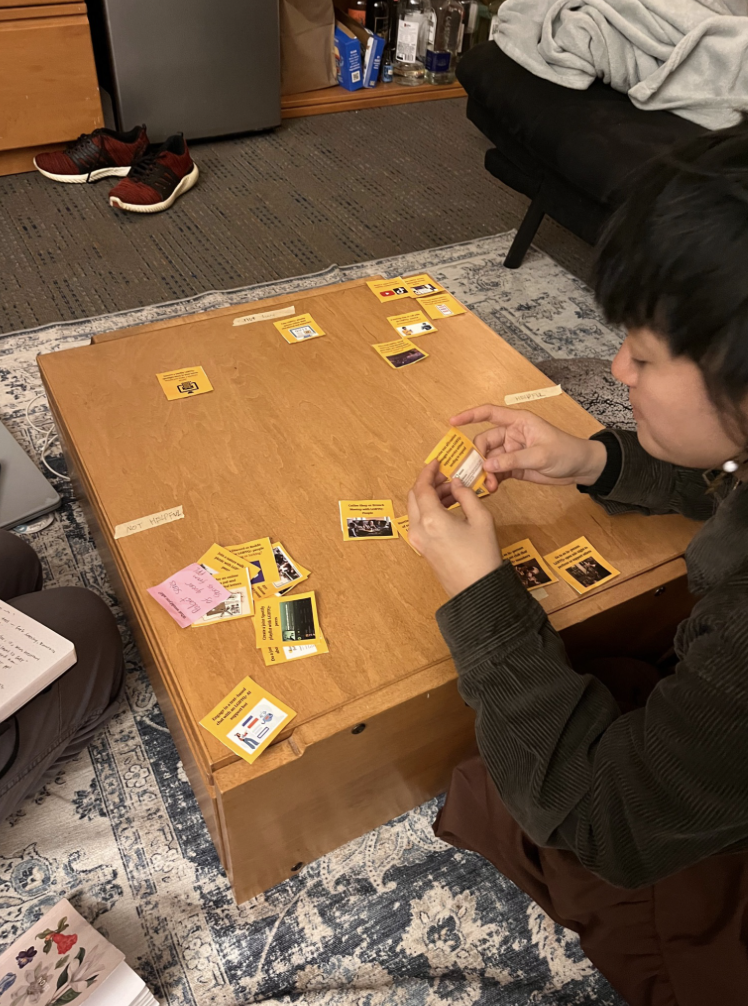
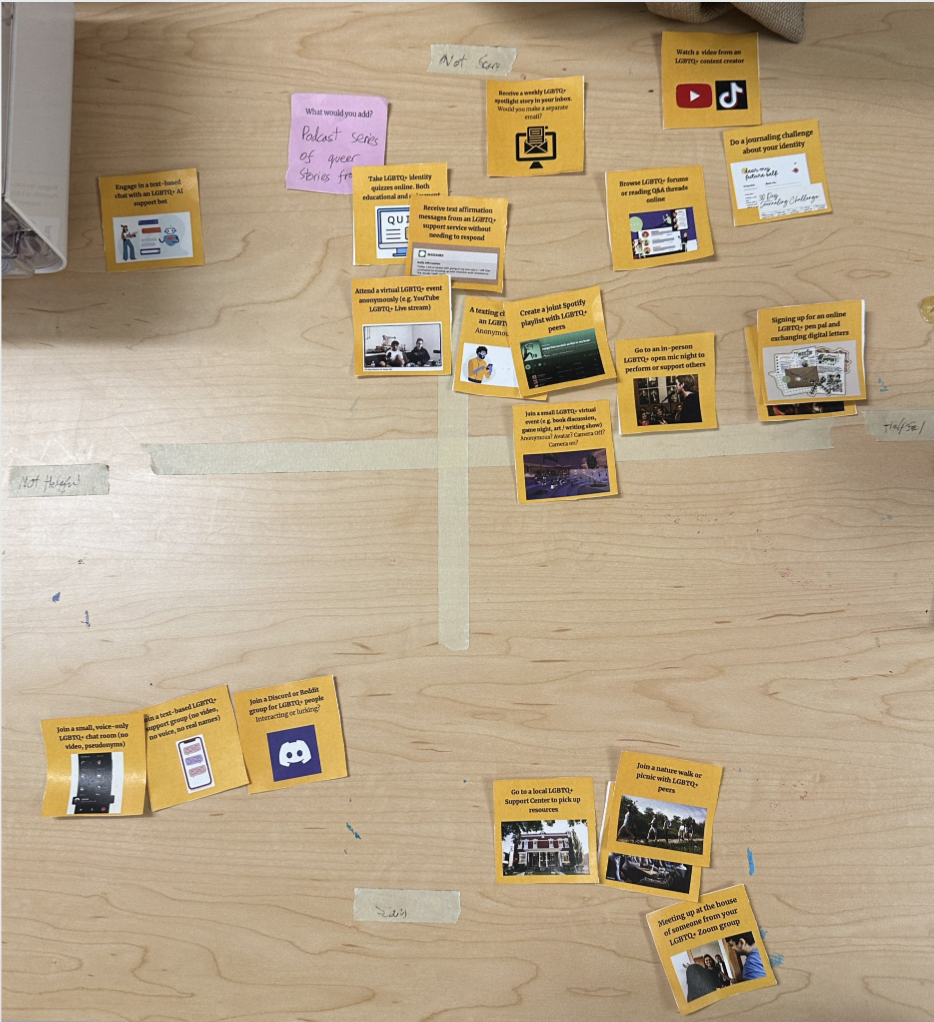
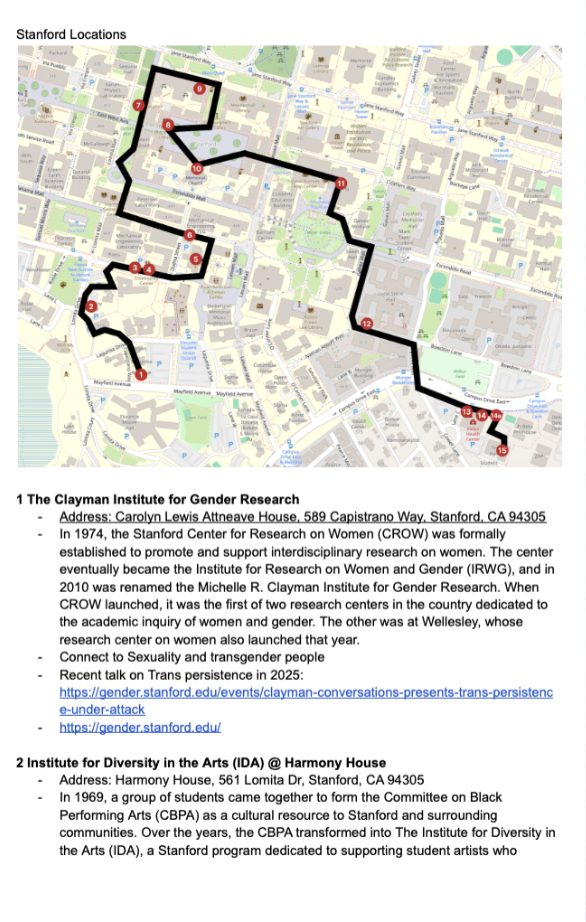
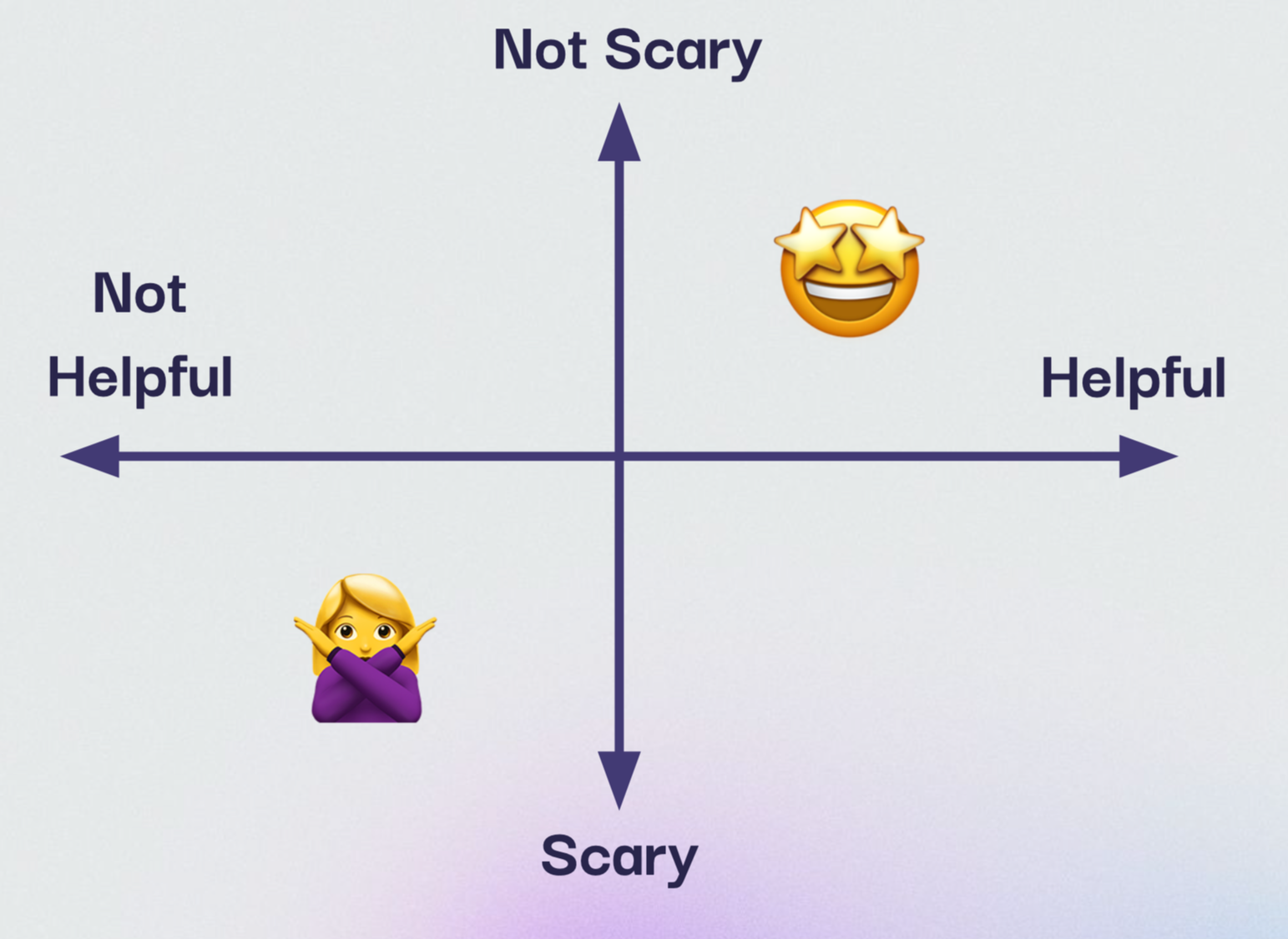
Our first stage of research was learning what was and wasn’t working with the existing approaches to support and connection. We devised a series of creative tasks for our interviewees to communicate how they felt about these tools throughout their own journey. One of these tasks was the matrix to the left. It was then up to us to learn from what we heard, and connect common factors of these tools.
Prototype 1
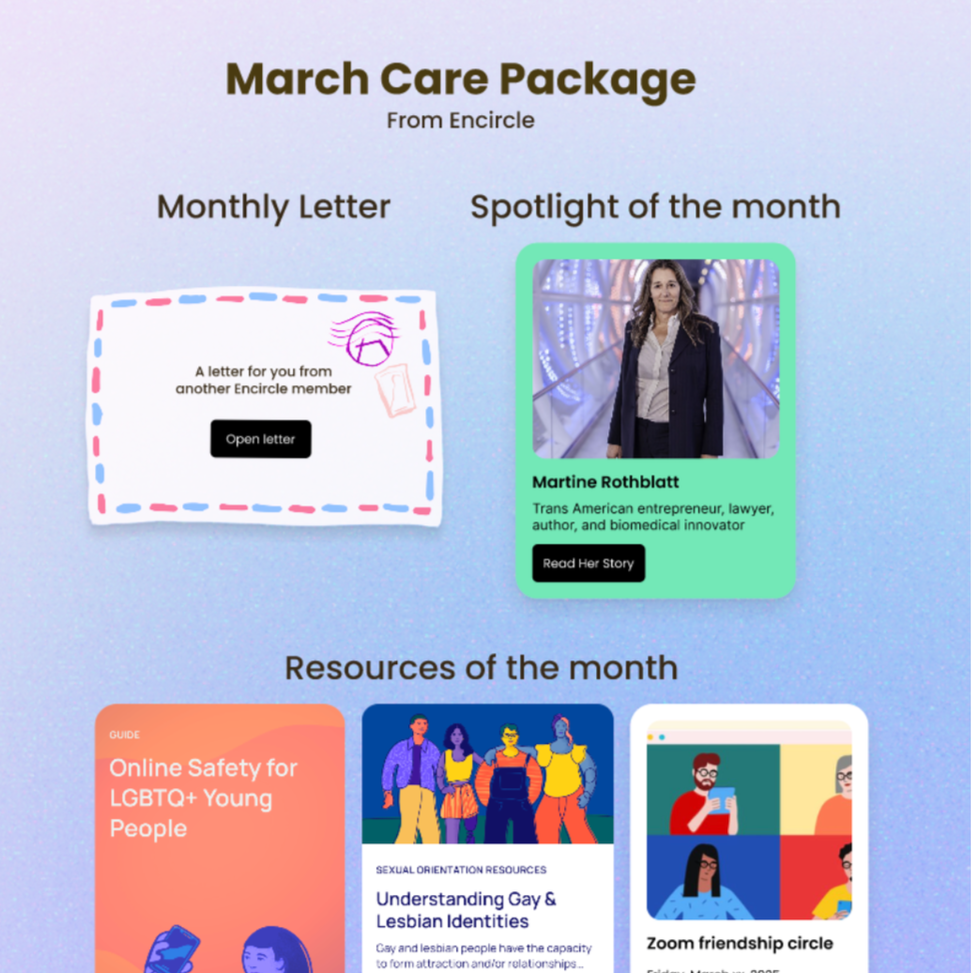
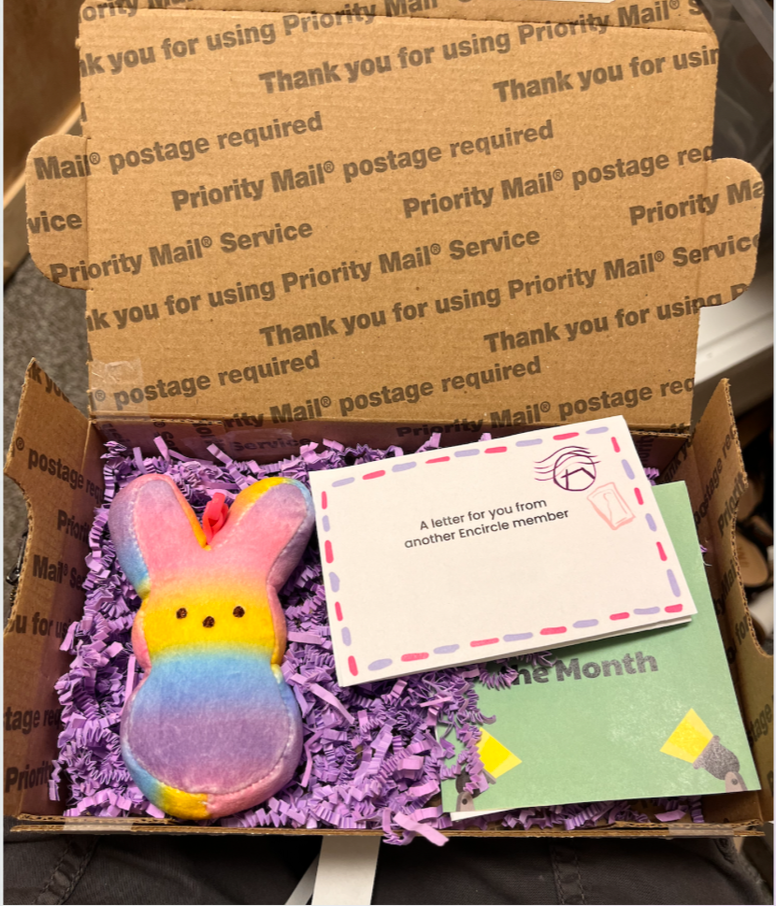
We also wanted to learn about the tradeoffs between physical and digital approaches. What was more appealing and helped them feel seen. We interviewed more potential users about how it would feel to receive a care package through email, verses a physical one in the mail. We brought these two versions shown to the right to interviews and asked for their thoughts.
Prototype 2 & 3
Encircle - Partnership
The Problem
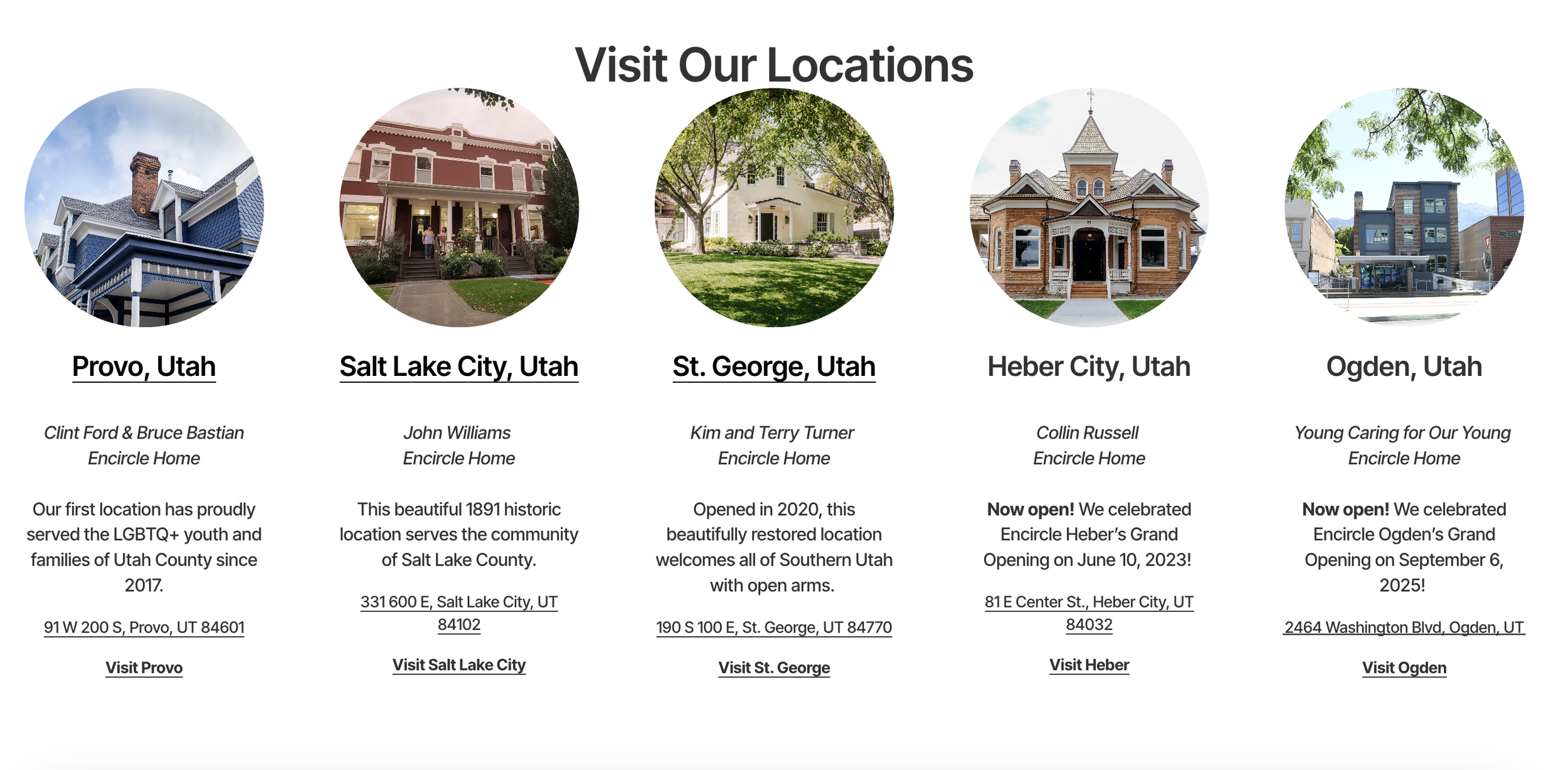
Encircle provides a home-away-from-home for youth who might not feel supported by those around them. Currently they offer a series of group activities and “friendship circles”, which take place in homes they have renovated. This model limits their offerings to only those who can commute to be in person, which is difficult for the young demographic.
During the covid pandemic, the non-profit tried taking their friendship circles online through video meetings (which would increase the geographic accessibility), however this was not appealing to the youth. We needed to design an engaging tool for youth looking for community that also felt safe to use no matter the situation in their household.
Message Meadow
Overview
Encircle is non-profit that provides support for LGBTQ+ youth in Utah, where suicide rates are tragically high . Their current model requires buying houses to support the youth, which is costly and not easily scalable. They asked us to come up with a product that increases the number of people who can feel the Encircle love and care, by moving away from their house-based model.
Including
User Reasearch
Prototyping
Figma
*From the Encircle website
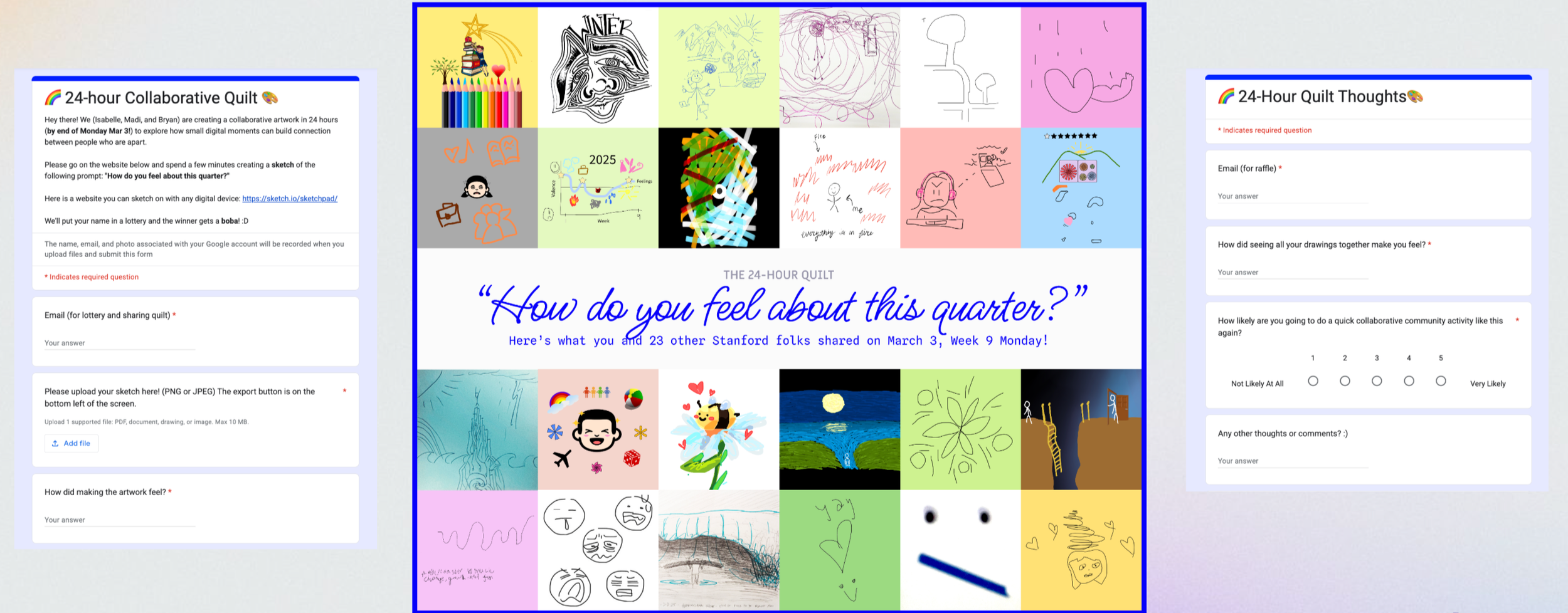
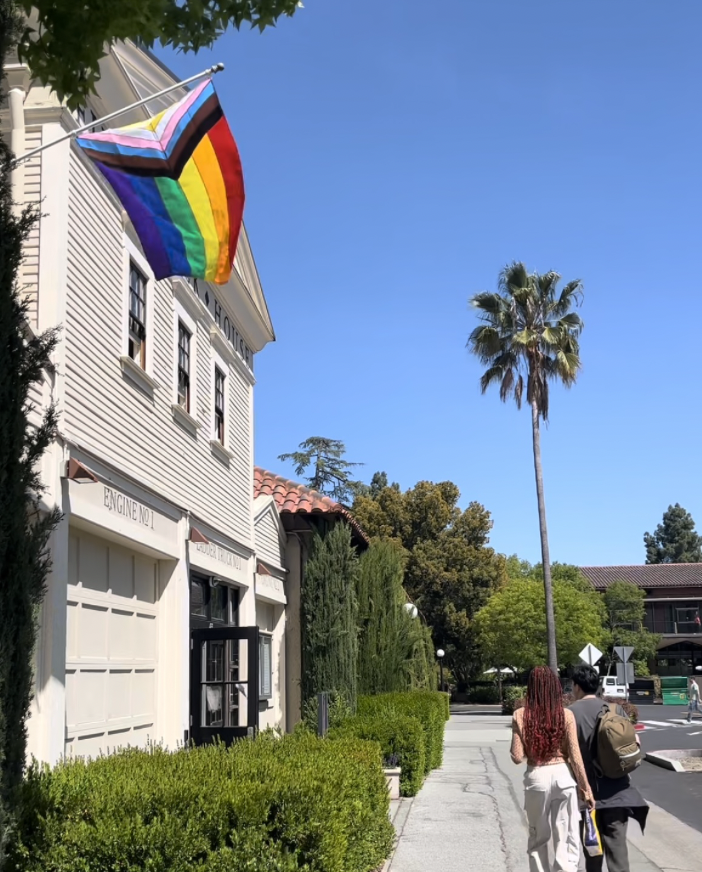
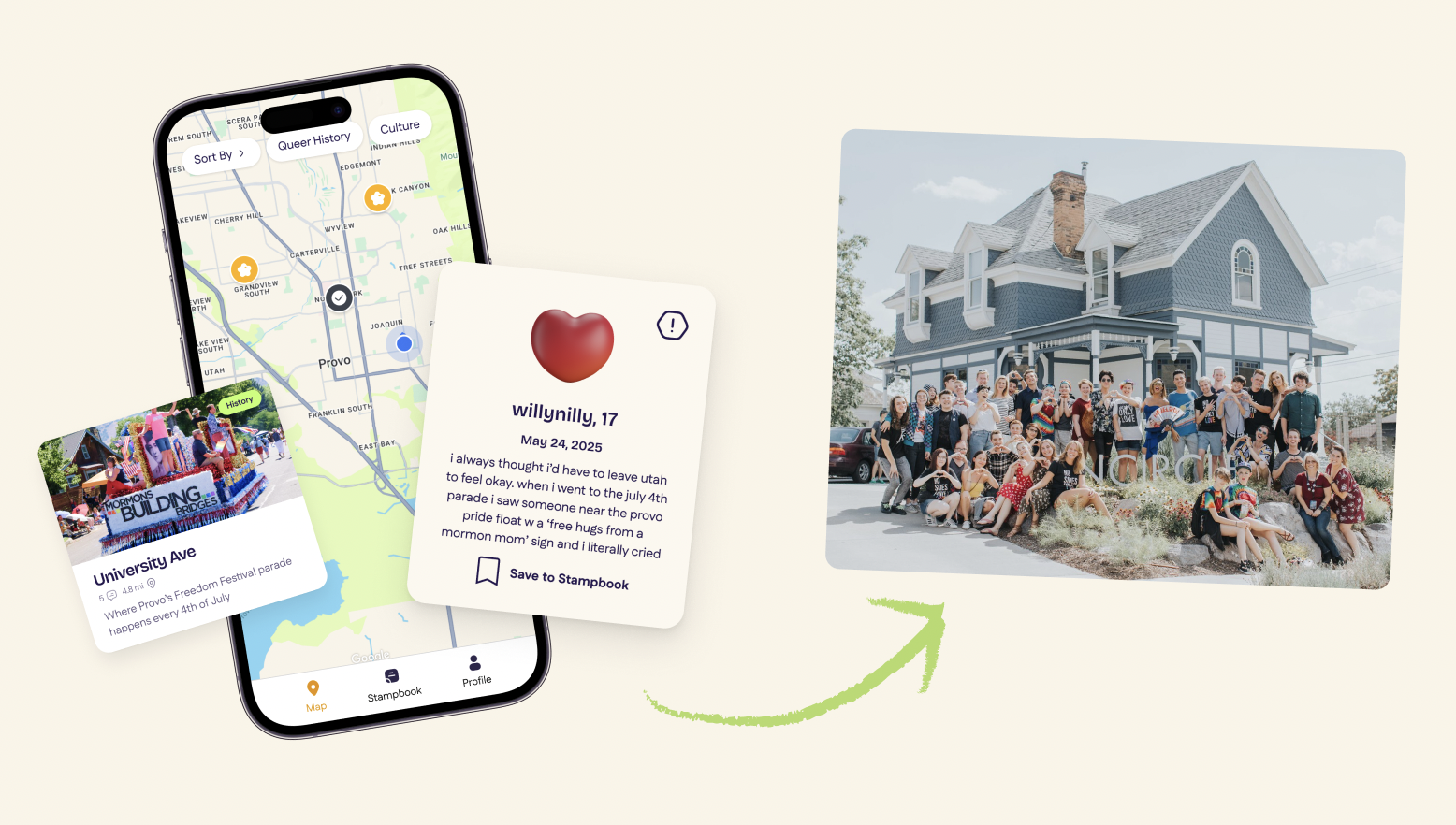
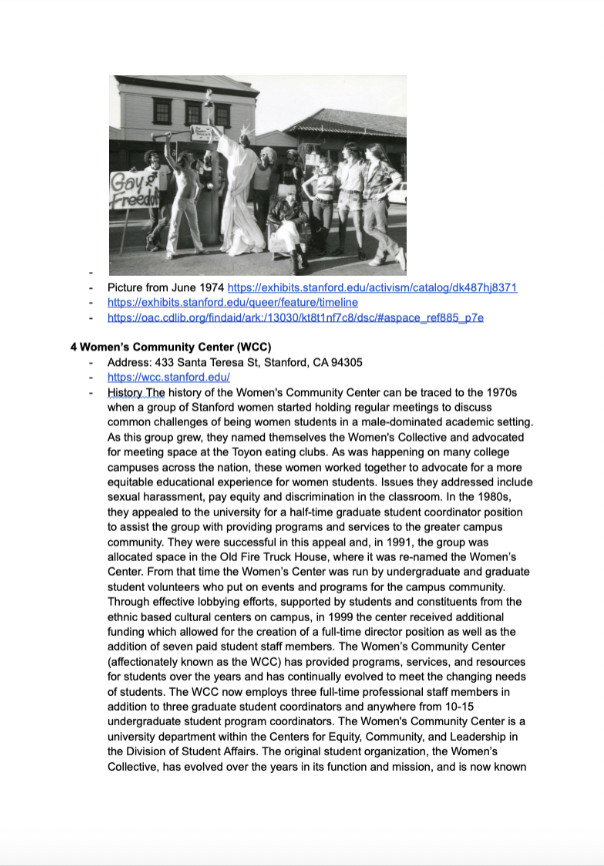
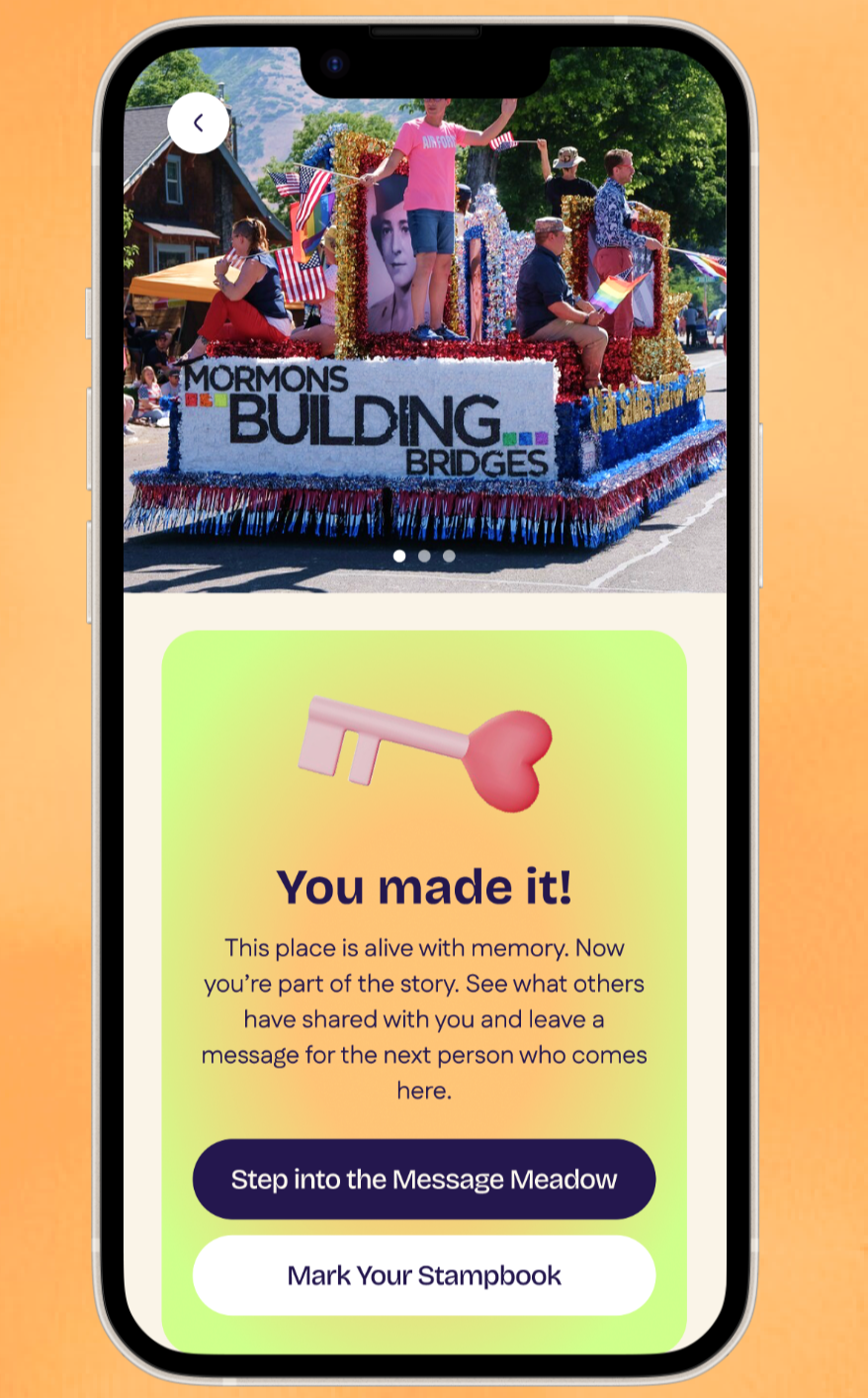
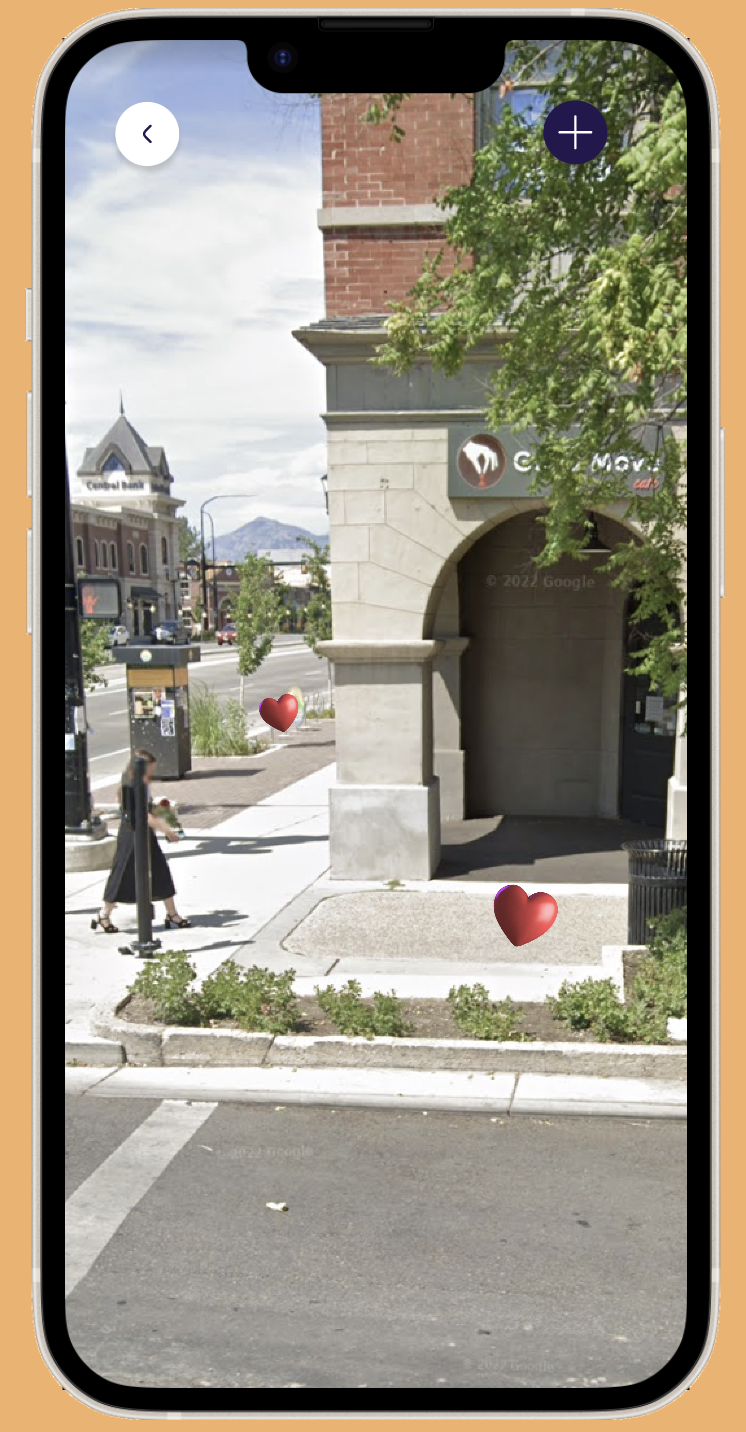
We did exploration into what type of digital activities creates a sense of belonging and community rather than isolation, like a collaboritive art activity. We also prototyped the impact of hearing the history of locations and if the youth could feel less alone not only because of those walking alongside them now, but because of those who would have been walking alongside them in the past.
The Solution
Our user research and tested iterations lead us to Encircle Around.
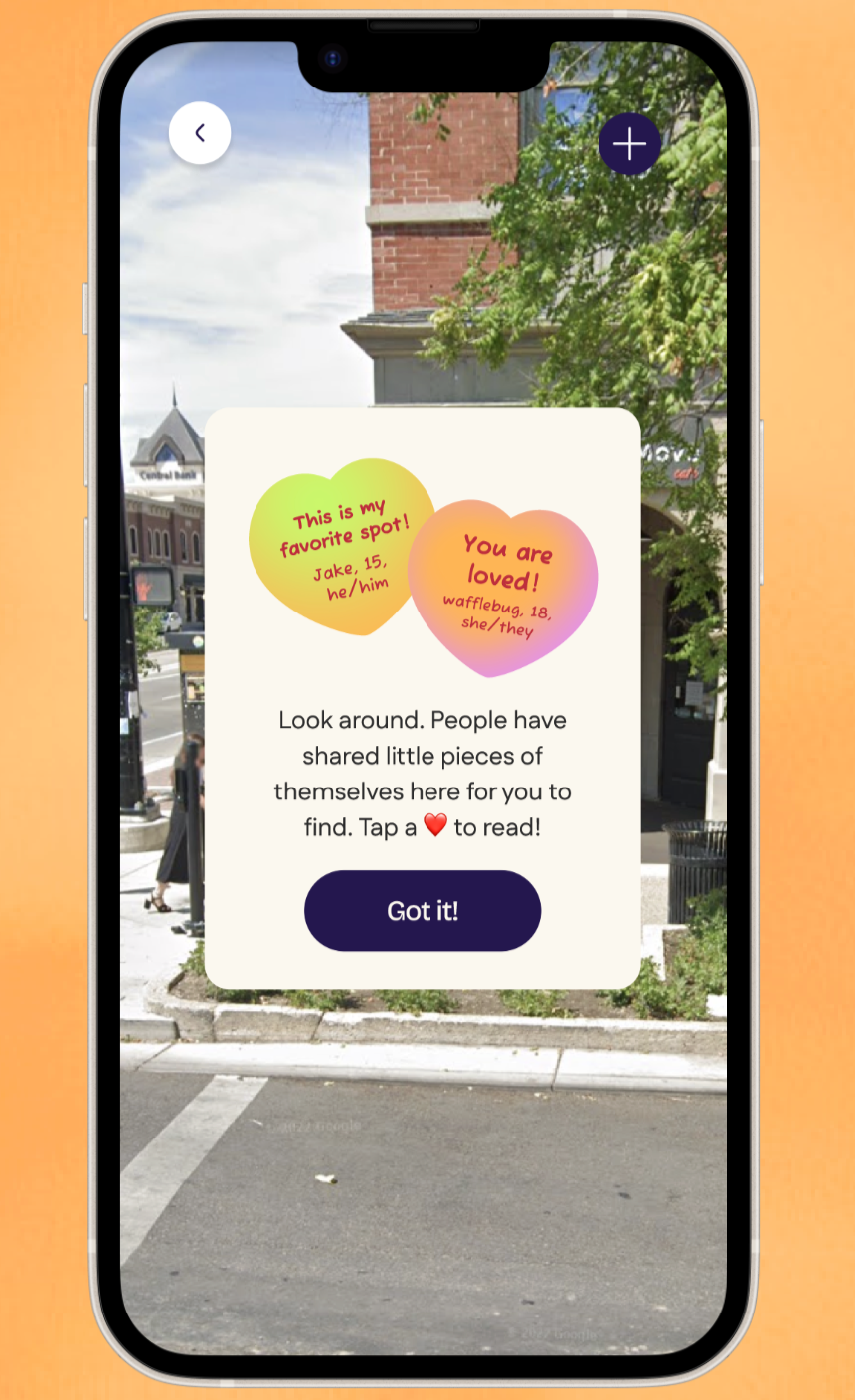
This is an app with different levels of engagement (something we found was important for different levels of comfort) that is for queer youth trying to find community with each other or feel connection with the environment they're in. Our hope is that through this app LGBTQ+ youth, even beyond Utah, can find kindness and Encircle love.
We presented our solution to the Encircle board, who really liked the product, and they are looking into avenues for implementation within their company.
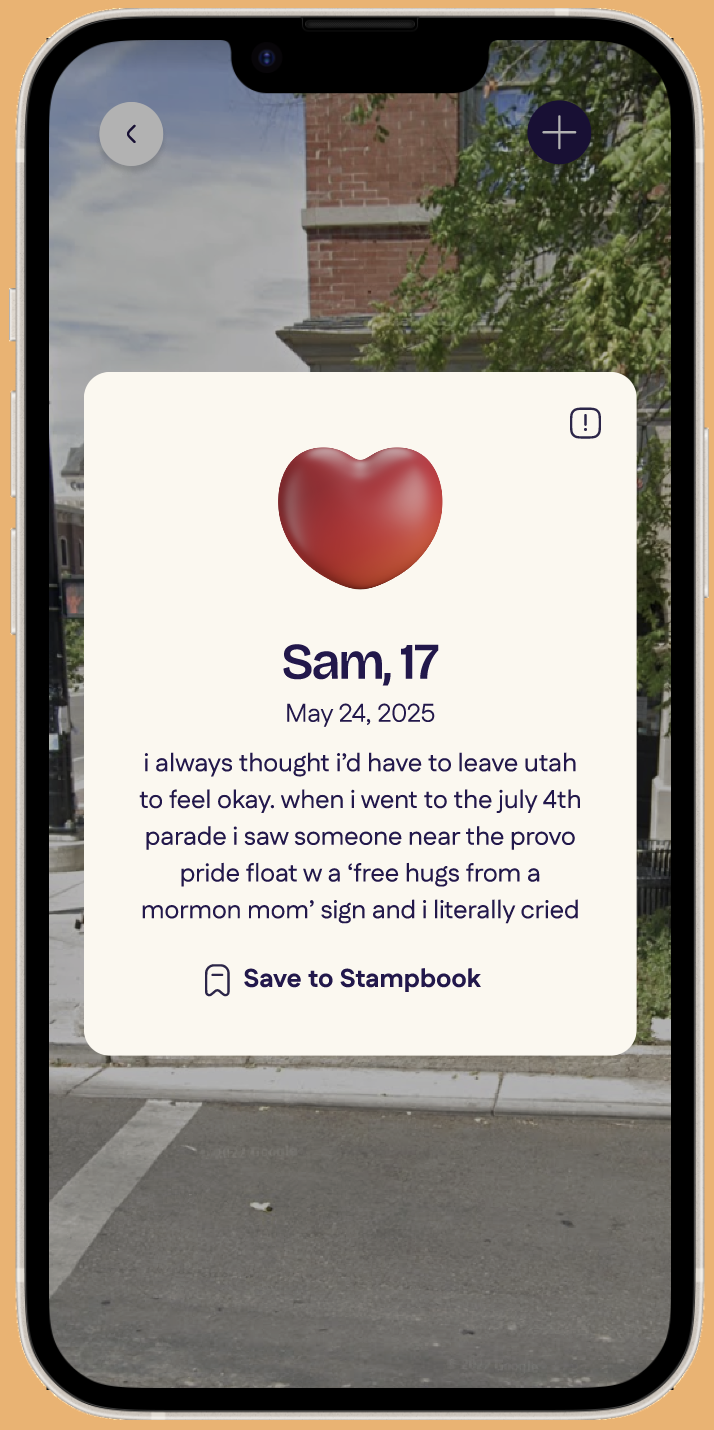
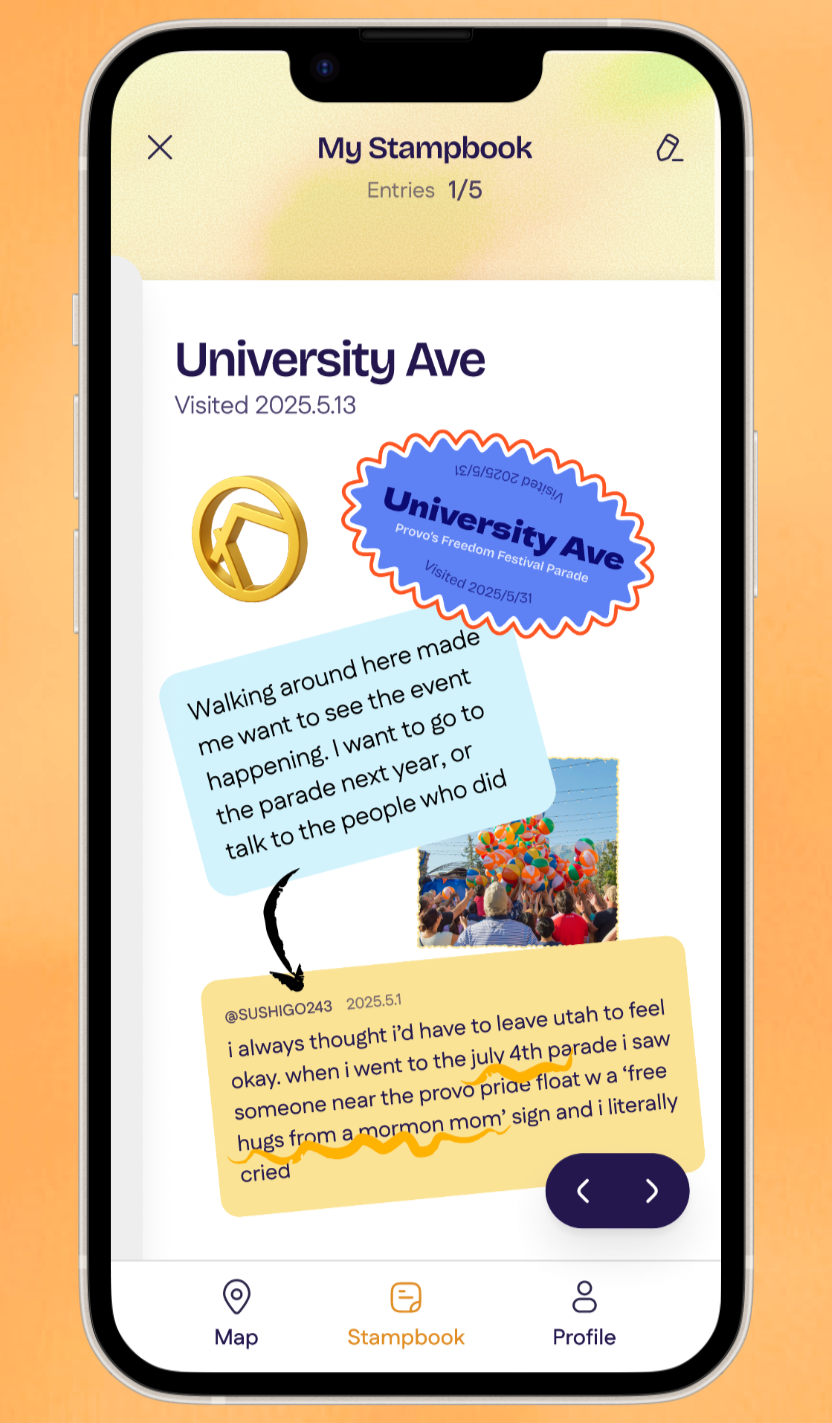
This highlights a feature in the app where users can share their feeling and stories with each other in a safe encouraging way.